
Description
Trade name:
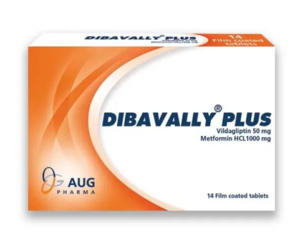
Glyptus plus
Gliptus plus
Compound:
Each tablet contains:
Vildagliptin 50 mg
Metformin hydrochloride 1000 mg
Properties:
Combined hypoglycemic agent for oral administration.
Vildagliptin, a member of the pancreatic islet stimulant class, selectively inhibits the DPP-4 enzyme, improving glycemic control. Inhibition of DPP-4 activity causes an increase in both basal and postprandial endogenous levels of incretin hormones: glucagon-like peptide type 1 (GLP-1) and glucose-dependent insulinotropic polypeptide (GIP).
The use of vildagliptin in patients with type 2 diabetes leads to a rapid and complete inhibition of DPP-4 activity, which is observed for 24 hours.
Metformin reduces hepatic glucose production, decreases intestinal glucose absorption, and reduces insulin resistance by enhancing glucose uptake and utilization by peripheral tissues. Metformin induces intracellular glycogen synthesis by acting on glycogen synthetase and enhances glucose transport by several membrane glucose transport proteins (GLUT-1 and GLUT-4). Improves glucose tolerance in patients with type 2 diabetes by lowering plasma glucose levels both before and after meals. Unlike sulfonylurea derivatives, metformin does not cause hypoglycemia either in patients with type 2 diabetes mellitus or in healthy individuals (except in special cases). Metformin does not lead to the development of hyperinsulinemia. When metformin is used, insulin secretion does not change, while the concentration of insulin in the blood plasma on an empty stomach and during the day may decrease.
The combination of these components allows more effective control of blood glucose concentration in patients with type 2 diabetes mellitus within 24 hours.
Indications:
Type 2 diabetes mellitus (in combination with diet therapy and exercise): with insufficient effectiveness of monotherapy with vildagliptin or metformin; in patients who previously received combination therapy with vildagliptin and metformin in the form of monodrugs.
Dosage and administration:
For oral administration. The dosage regimen is selected individually depending on the effectiveness and tolerability of therapy. When using this combination, the recommended maximum daily dose of vildagliptin 100 mg and metformin hydrochloride 2000 mg should not be exceeded.
Contraindications:
– Diabetes mellitus type 1;
– renal failure or severe renal dysfunction with GFR <30 ml / min;
– acute conditions with a risk of developing impaired renal function: dehydration (with diarrhea, vomiting), fever, severe infectious diseases, hypoxia conditions (shock, sepsis, kidney infections, bronchopulmonary diseases);
– acute and chronic heart failure, acute myocardial infarction, acute cardiovascular failure (shock), respiratory failure;
– violations of liver function;
– acute or chronic metabolic acidosis;
-should not be used 48 hours before surgery, radioisotope, X-ray studies with the introduction of contrast agents and within 48 hours after they are carried out;
-chronic alcoholism, acute alcohol poisoning;
-pregnancy, lactation (breastfeeding);
Hypersensitivity to vildagliptin or metformin.
Precautionary measures:
In patients receiving insulin treatment, this combination cannot replace insulin therapy.
Regularly during treatment with the drug, it is recommended to determine the biochemical parameters of liver function. Lactic acidosis is a very rare but severe metabolic complication that most often occurs with a sharp deterioration in kidney function, as well as cardio-respiratory syndromes, sepsis. With a sharp deterioration in kidney function, metformin accumulates in the body, which increases the risk of developing lactic acidosis.
Side effects:
From the nervous system: often – headache, dizziness, tremor. When using vildagliptin in combination with metformin at various doses, hypoglycemia was observed in 0.9% of cases (for comparison, in the placebo group in combination with metformin – in 0.4%).
From the digestive system: often – nausea, gastroesophageal reflux, dysgeusia; infrequently – diarrhea, flatulence; very rarely – hepatitis.
From the side of metabolism and nutrition: very often – loss of appetite; often – hypoglycemia; very rarely – lactic acidosis.
Infectious and parasitic diseases: very rarely – infections of the upper respiratory tract, nasopharyngitis.
General disorders and disorders at the injection site: often – chills.
From the skin and subcutaneous tissues: often – hyperhidrosis; very rarely – skin reactions (in particular, erythema, itching, urticaria).
From the musculoskeletal and connective tissue: often – arthralgia.
From the side of the vessels: infrequently – peripheral edema.
Storage method:
Store at a temperature not exceeding 30 degrees.
Package:
The cardboard box contains 3 blisters of 10 tablets, paper instructions.