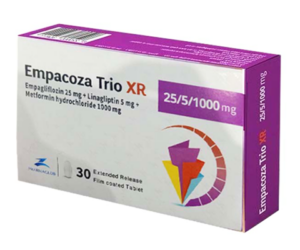
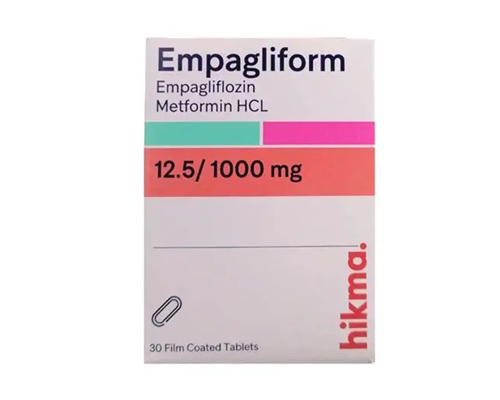
Description
Empagliform 12.5/1000 mg 30 tablets
Composition:
Active ingredients (per tablet):
Empagliflozin 12.5 mg, Metformin hydrochloride 1000 mg.
Inactive ingredients: corn starch, copovidone (plasdone S-630), colloidal anhydrous silica, magnesium stearate, opadry yellow for 5/500 mg, opadry II orange for 5/1000 mg, opadry II white for 12.5/500 mg and 12.5/1000 mg.
Description:
A fixed-dose combination of empagliflozin and metformin hydrochloride indicated as adjunct to diet and exercise for improving glycemic control in adults with type 2 diabetes mellitus when treatment with both components is appropriate.
Empagliflozin reduces the risk of cardiovascular death in adults with type 2 diabetes mellitus and established cardiovascular disease.
Indications for Use:
– Adjunct to diet and exercise for improving glycemic control in adults with type 2 diabetes mellitus requiring both empagliflozin and metformin.
– Empagliflozin reduces cardiovascular mortality in T2DM with established CVD (effect not established for the combination product).
Dosage and Administration:
– Take twice daily with meals.
– Titrate gradually to reduce GI side effects due to metformin.
– Maximum daily doses: metformin HCl 2000 mg, empagliflozin 25 mg.
Contraindications:
– Moderate to severe renal impairment (eGFR < 45 mL/min/1.73 m²), ESRD, dialysis
– Acute or chronic metabolic acidosis, including diabetic ketoacidosis
– History of serious hypersensitivity to empagliflozin, metformin or excipients.
Precautions
– Lactic acidosis: risk increased with renal impairment, hepatic impairment, hypoxia, age ≥65, dehydration, alcohol use, contrast studies.
– Hypotension due to volume depletion.
– Ketoacidosis (may occur with normal blood glucose).
– Acute kidney injury due to volume depletion or interacting drugs.
– Urosepsis and pyelonephritis.
– Genital mycotic infections.
– Hypoglycemia with insulin or sulfonylureas.
– Vitamin B12 deficiency with long-term metformin.
– Increased LDL-C.
– Serious hypersensitivity reactions including angioedema.
– Fournier’s gangrene.
Side Effects:
Commonly reported:
Hypoglycemia (with insulin/sulfonylurea), Urinary tract infection, Nasopharyngitis, Increased urination, Female and male genital mycotic infections, Dyslipidemia, Arthralgia, Nausea.
Volume-depletion related:
Decreased blood pressure, Dehydration, Hypovolemia, Orthostatic hypotension, Syncope.
Other reactions:
Increased LDL-C, Increased hematocrit, Diarrhea, Vomiting, Flatulence, Abdominal discomfort, Headache, Vitamin B12 deficiency, Acute kidney injury, Ketoacidosis, Urosepsis, pyelonephritis, Angioedema, Rash, urticaria, Fournier’s gangrene, Skin reactions.
Pregnancy and Lactation:
Pregnancy:
Not recommended during the 2nd and 3rd trimesters due to adverse renal effects in animal data.
Poor glycemic control increases maternal and fetal risks.
Lactation:
– Metformin is present in human milk.
Not recommended during breastfeeding.
Storage Conditions
Store below 30 °C.
Keep in a dry place.
Keep out of reach of children.
Packaging:
Carton box containing 3 blisters of 10 film-coated tablets and inner leaflet.