Description
Trade Name:
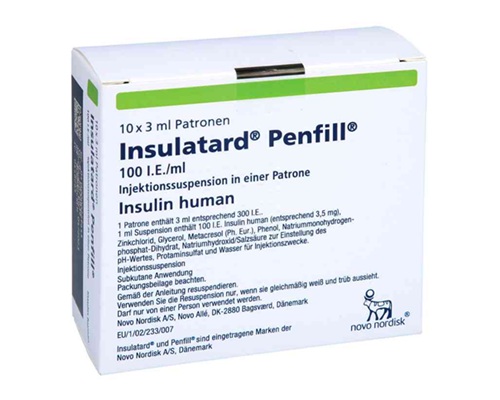
Insulatard®Penfill® 100 units/mL
Suspension for subcutaneous administration
Cartridges for reusable insulin pens
5× 3 ml
Composition:
Each ml contains 100 IU of human insulin. Each cartridge contains 300 IU
of human insulin in 3 mL of suspension for injection.
Inactive ingredients: zinc chloride, glycerin, metacresol, phenol, sodium phosphate dihydrate, sodium hydroxide, hydrochloric acid, protamine sulfate and water for injection.
Properties:
A medium duration of action insulin preparation. Reduces blood glucose concentration, increases its absorption by tissues, increases lipogenesis and gluconeogenesis, protein synthesis, reduces the rate of glucose production by the liver. It interacts with a specific receptor of the outer membrane of cells and forms an insulin receptor complex. Through activation of cAMP synthesis (in fat cells and liver cells) or directly penetrating into the cell (muscles), insulin receptor complex stimulates intracellular processes, including the synthesis of a number of key enzymes (hexokinase, pyruvate kinase, glycogen synthetase, etc.). Decrease in blood glucose content is caused by an increase in its intracellular transport, increased absorption and assimilation by tissues, stimulation of lipogenesis, glycogen organogenesis, protein synthesis, decrease in the rate of glucose production by the liver (decrease in glycogen breakdown), etc. After subcutaneous injection, the effect occurs in 1-1.5 h. The maximum effect – between 4-12 h, duration of action – 11-24 h, depending on the composition of insulin, dose and patient’s condition.
Indications:
– Type 1 diabetes mellitus;
– Diabetes mellitus type 2;
– Stage of resistance to oral hypoglycemic drugs, partial resistance to oral hypoglycemic drugs (combined therapy);
– Intercurrent diseases, surgical interventions (mono- or combined therapy), diabetes mellitus against the background of pregnancy (with ineffectiveness of diet therapy).
Dosage and administration:
1-2 times a day, 30-45 min before breakfast (change the injection site each time). In special cases, the doctor may prescribe intramuscular injections of the drug. Intravenous administration of insulin of medium duration of action is prohibited! Doses are selected individually and depend on the glucose content in blood and urine, peculiarities of the course of the disease. Usually doses are 8-24 IU once a day. In adults and children with high sensitivity to insulin, a dose of less than 8 IU/day may be sufficient, in patients with reduced sensitivity – more than 24 IU/day. For a daily dose exceeding 0.6 IU/kg – as 2 injections at different sites. Patients receiving 100 IU or more per day, when changing insulin, it is advisable to hospitalize. Transfer from one drug to another should be carried out under the control of blood glucose.
Side effects:
-Allergic reactions (urticaria, angioedema, fever, dyspnea, decreased BP);
-hypoglycemia (pale skin, increased sweating, evaporation, palpitations, tremors, hunger, agitation, anxiety, paresthesias in the mouth, headache, drowsiness, insomnia, fear, depressed mood, irritability, unusual behavior, uncertain movements, speech and vision disorders), hypoglycemic coma;
-hyperglycemia and diabetic acidosis (at low doses, missed injection, noncompliance with diet, against a background of fever and infections) drowsiness, thirst, decreased appetite, facial hyperemia);
-disturbance of consciousness (up to the development of precoma and coma);
-transient visual disturbances (usually at the beginning of therapy); -immunologic cross-reactions with human insulin; increase in the titer of anti-insulin antibodies with subsequent increase in glycemia;
-hyperemia, pruritus and lipodystrophy (atrophy or hypertrophy of subcutaneous adipose tissue) at the injection site. At the beginning of treatment – edema and refractive disorders (are temporary and pass with continued treatment).
Contraindications:
-Hypersensitivity, hypoglycemia, insulinoma.
Warnings and precautions:
-Check the transparency of the solution before taking insulin from the vial. If there are foreign bodies, turbidity or precipitation of substance on the glass of the vial, the solution of the drug can not be used. The temperature of administered insulin should correspond to room temperature.
-Insulin dosage should be adjusted in cases of infectious diseases, in thyroid dysfunction, Addison’s disease, hypopituitarism, CKD and diabetes mellitus in persons over 65 years of age.
-Causes of hypoglycemia may include insulin overdose, drug replacement, skipping meals, vomiting, diarrhea, physical exertion; diseases that reduce the need for insulin (advanced kidney and liver disease, as well as hypofunction of the adrenal cortex, pituitary gland or thyroid gland), change of injection site (eg, skin on the abdomen, shoulder, thigh), as well as interaction with other drugs. There may be a decrease in blood glucose concentration when transferring the patient from animal insulin to human insulin.
Tendency to hypoglycemia development may impair the ability of patients to actively participate in road traffic, as well as to service machines and mechanisms.
Patients with diabetes mellitus can manage mild hypoglycemia, which they feel themselves, by taking sugar or high-carbohydrate food (it is recommended to always have at least 20 g of sugar with you). Hypoglycemia should be reported to the attending physician in order to decide whether treatment correction is necessary.
-Transfer of the patient to human insulin should always be medically justified and should only be carried out under the supervision of a physician.
-Pregnancy and lactation:
During pregnancy, a decrease (I trimester) or increase (II-III trimesters) in insulin requirement should be considered. During and immediately after childbirth, insulin requirements may decrease dramatically.
During lactation, daily monitoring is required for several months (until insulin requirement stabilizes).
-Keep out of reach of children.
Storage:
Store in the refrigerator (4-8°C).
The cartridge currently in use should be stored at room temperature.
Insulin should not be placed near the freezer as it cannot tolerate temperatures below +2°.
Package:
Carton box holds 5 cartridges each of 3 ml, paper instructions