
Description
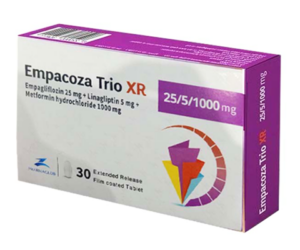
Mellitofix Trio 25/5/1000 mg 30 tablets
Composition:
Each extended-release film-coated tablet contains:
Empagliflozin 25 mg + Linagliptin 5 mg + Metformin Hydrochloride (extended-release) 1000 mg.
Product description:
Fixed-dose combination of an SGLT2 inhibitor (empagliflozin), a DPP-4 inhibitor (linagliptin), and a biguanide (metformin XR).
Extended-release, film-coated oral tablets designed for once-daily dosing.
Indications for use:
Adjunct to diet and exercise to improve glycemic control in adults with type 2 diabetes mellitus when combination therapy is appropriate.
Not indicated for type 1 diabetes or diabetic ketoacidosis.
Method of administration and dosage:
Oral, once daily with a meal.
Swallow tablets whole; do not split, crush, or chew.
Dosing and initiation depend on prior therapies, tolerability to metformin, and renal function (eGFR).
Assess renal function before starting and periodically.
Contraindications:
Hypersensitivity to empagliflozin, linagliptin, metformin, or excipients.
Severe renal impairment (eGFR < 30 mL/min/1.73 m²), end-stage renal disease or dialysis.
Acute metabolic acidosis (including DKA).
Conditions predisposing to lactic acidosis.
Precautions:
– Lactic acidosis (metformin): Higher risk with renal impairment, hypoxic states, dehydration, or excessive alcohol intake.
– Ketoacidosis and volume depletion (SGLT2): Monitor; hold during acute illness or major surgery.
– Pancreatitis (DPP-4): Discontinue if suspected.
– Hypoglycemia: Risk increases with insulin or sulfonylureas.
– Genital mycotic infections/UTIs (SGLT2): Counsel and monitor.
– Iodinated contrast: Consider temporary interruption of metformin around imaging in at-risk patients.
Adverse reactions (side effects):
Common: GI upset (nausea, diarrhea, abdominal discomfort), increased urination, genital fungal infections, UTIs, nasopharyngitis, headache.
Less common: dizziness, rash, pruritus, dehydration, hypotension.
Rare/serious: lactic acidosis, euglycemic DKA, pancreatitis, angioedema, Fournier’s gangrene.
Pregnancy and lactation:
Use is generally not recommended during pregnancy; SGLT2 inhibitors are typically avoided (especially 2nd/3rd trimesters).
Components may be excreted in breast milk; weigh benefits and risks during lactation.
Storage conditions:
Store below 30°C in original packaging, protected from moisture and light.
Keep out of reach of children.
Do not split, crush, or chew tablets.
Packaging:
Carton containing 30 extended-release film-coated tablets (25/5/1000 mg), in blister packs.