Description
Trade name:
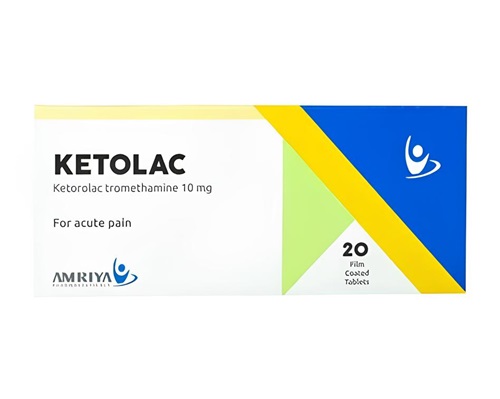
Ketolac
Compound:
Each tablet contains:
Ketorolac tromethamine 10 mg
Auxiliary components:
Calcium phosphate dibasic, microcrystalline cellulose, crospovidone, magnesium stearate, ethanol.
Properties:
Ketorolac is a NSAID that has a pronounced analgesic (pain-relieving) effect, and also has anti-inflammatory and moderate antipyretic effects.
The mechanism of action is associated with non-selective inhibition of the activity of COX-1 and COX-2 enzymes, mainly in peripheral tissues, resulting in inhibition of the biosynthesis of prostaglandins – modulators of pain sensitivity, inflammation and thermoregulation. Ketorolac is a racemic mixture of R (+) and S (-) enantiomers, with the analgesic (pain-relieving) effect due to the S (-) enantiomer.
Ketorolac does not affect opioid receptors, does not depress respiration, does not cause drug dependence, and does not have a sedative or anxiolytic effect.
In terms of analgesic (pain-relieving) effect, it is comparable to morphine and significantly superior to other NSAIDs.
After oral administration, the onset of analgesic (pain-relieving) action is noted after 1 hour, with the maximum effect achieved after 2-3 hours.
Indications:
Pain syndrome of severe and moderate severity: injuries, toothache, pain in the postoperative period, oncological diseases, myalgia, arthralgia, neuralgia, radiculitis, dislocations, sprains, rheumatic diseases.
It is intended for symptomatic therapy, reduction of pain and inflammation at the time of use, and does not affect the progression of the disease.
Method of administration and dosage:
The drug should be administered orally once or repeatedly depending on the severity of the pain syndrome.
Single dose – 10 mg, with repeated use it is recommended to take 10 mg up to 4 times a day depending on the severity of pain. The maximum daily dose should not exceed 40 mg.
When taken orally, the duration of the course should not exceed 5 days.
Contraindications:
– complete or incomplete combination of bronchial asthma, recurrent polyposis of the nose and paranasal sinuses and intolerance to acetylsalicylic acid or other NSAIDs (including history);
– urticaria, rhinitis caused by taking NSAIDs (in history);
– intolerance to drugs of the pyrazolone series;
-dehydration, hypovolemia (regardless of the cause);
-bleeding or high risk of its development;
– condition after coronary artery bypass grafting;
-confirmed hyperkalemia;
-inflammatory bowel diseases;
-erosive and ulcerative lesions of the gastrointestinal tract in the acute stage, peptic ulcers;
-hypocoagulation (including hemophilia);
– severe renal failure (CC less than 30 ml/min);
– severe liver failure or active liver disease;
– hemorrhagic stroke (confirmed or suspected);
-hemorrhagic diathesis;
– hematopoiesis disorder;
-pregnancy;
-childbirth;
– lactation period (breastfeeding);
– children under 16 years of age (efficacy and safety have not been established);
– hypersensitivity to ketorolac and other NSAIDs.
Precautions:
When used in combination with other NSAIDs, fluid retention, cardiac decompensation, and arterial hypertension may occur.
To reduce the risk of developing NSAID gastropathy, antacids, misoprostol, and omeprazole are prescribed.
Side effects:
From the digestive system: often (especially in elderly patients over 65 years of age with a history of erosive and ulcerative gastrointestinal lesions) – gastralgia, diarrhea.
From the central nervous system and peripheral nervous system: often – headache, dizziness, drowsiness.
Others: often – swelling (including of the face, shins, ankles, fingers, feet), weight gain; less often – increased sweating; rarely – swelling of the tongue, fever.
Storage method:
Store at temperatures not exceeding 30 degrees