Description
Tradename:
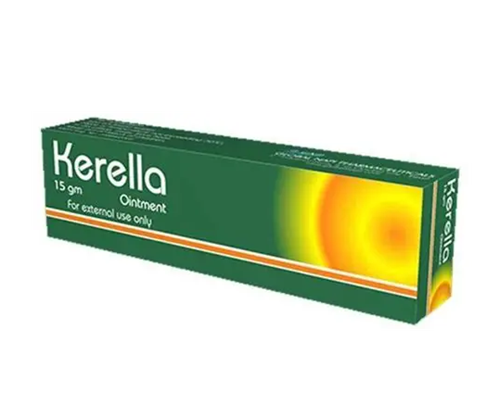
kerella
Composition:
1 gram of ointment contains:
Betamethasone dipropionate 0.64 mg
Salicylic acid 30 mg
Properties:
Betamethasone dipropionate, a synthetic fluorinated GCS, has anti-inflammatory, antipruritic and vasoconstrictor effects.
When applied topically, salicylic acid has keratolytic, bacteriostatic and some fungicidal effects.
Indications:
Kerell’s ointment is indicated for reducing the inflammatory manifestations of dry and hyperkeratic dermatoses, sensitive to GCS therapy, including: -psoriasis; -chronic atopic dermatitis; – neurodermatitis (chronic lichen simplex); – flat lichen; -eczema (including coin eczema, hand eczema, eczematous dermati -dyshidrosis; – seborrheic dermatitis of the scalp; -ichthyosis and other ichthyosis-like conditions.
Method of administration and dosage:
The ointment should be applied in a thin layer 2 times a day – in the morning and at night, completely covering the affected skin. In some patients, a supportive effect can be achieved with less frequent applications.
Contraindications:
– an indication of a history of hypersensitivity reactions to any of the components of the ointment.
Precautions:
If irritation or hypersensitization develops against the background of using Kerell’s ointment, treatment should be discontinued.
In case of infection, appropriate therapy should be prescribed.
With local application of GCS, especially in children, there may be side effects characteristic of systemic GCS, including inhibition of the function of the hypothalamic-
pituitary-adrenal system.
Systemic absorption of corticosteroids and salicylic acid when applied topically will be higher when using occlusive dressings, as well as when used on large body surfaces.
With long-term drug treatment, it is recommended to withdraw it gradually.
Kerell’s ointment is not intended for use in ophthalmology. Avoid contact with eyes and mucous membranes.
Side effects:
Adverse events that occurred with the use of local GCS included burning, itching, irritation, dry skin, folliculitis, hypertrichosis, acne-like rashes, hypopigmentation, perioral dermatitis, allergic contact dermatitis. The following phenomena more often occurred with the use of occlusive dressings: skin maceration, secondary infection, skin atrophy, striae and prickly heat.
Salicylic acid preparations can cause dermatitis.