Description
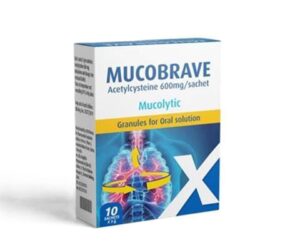
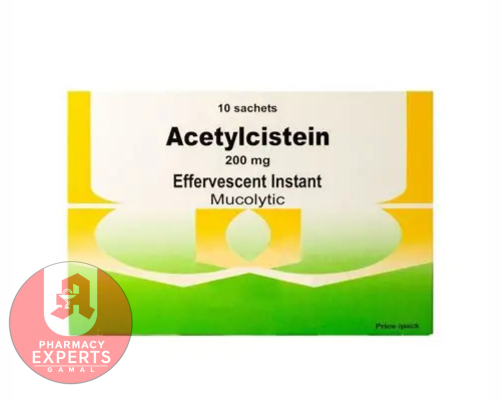
Acetylcistein 200 mg 10 sachets
Composition:
Active Ingredient: Acetylcysteine — 200 mg per sachet.
Excipients: Ascorbic acid, sorbitol, lemon flavor (food flavoring “Lemon”), aspartame.
Product Description:
Mucolytic agent (a derivative of the amino acid cysteine) in the form of granulated powder for oral solution.
Acetylcysteine exerts a direct liquefying effect on sputum by cleaving the disulfide bonds of acid mucopolysaccharides.
It reduces sputum viscosity, stimulates mucociliary clearance, decreases bacterial adhesion to the bronchial mucosa, and retains its activity in the presence of mucous, mucopurulent, or purulent sputum.
Indications for Use:
- Mucolytic therapy for acute and chronic diseases of the respiratory tract and ENT organs accompanied by excessive formation of viscous sputum (as part of combination therapy):
- Acute and chronic bronchitis;
- Tracheitis and laryngitis;
- Sinusitis;
- Influenza and acute respiratory viral infections;
- Bronchial asthma;
- Cystic fibrosis (as adjunctive therapy).
Method of Administration and Dosage:
- How to use: Oral administration.
The contents of one sachet (granulated powder) should be dissolved in 1/3 glass of water immediately before ingestion. - Standard dosage in acute conditions:
Children aged 2 to 7 years: 100 mg (1/2 sachet) 3 times daily.
Children over 7 years: 200 mg (1 sachet) 3 times daily.
Children over 12 years and adults: 200–400 mg (1–2 sachets) 3 times daily, or 600 mg once daily. - Special dosing regimens:
Long-term treatment (only under medical supervision): 400–600 mg per day in one or more divided doses.
Maximum duration of treatment ranges from 3 to 6 months. - If excessive secretion and persistent cough continue after 2 weeks of treatment, the diagnosis should be reassessed to exclude potential respiratory tract malignancies.
Contraindications:
- Active peptic ulcer of the stomach or duodenum
- Hemoptysis and pulmonary hemorrhage
- Lactation (breastfeeding) period
- Children under 2 years of age (for 100 mg dose) and under 7 years of age (for unsupervised 200 mg dose)
- Known hypersensitivity or allergy to acetylcysteine or any inactive excipients
Precautions:
- Use with caution in patients with a history of gastric or duodenal ulcer, bronchial asthma, hepatic and/or renal impairment, esophageal varices, adrenal disorders, or arterial hypertension.
- In patients with histamine intolerance, long-term use should be avoided as acetylcysteine affects histamine metabolism and may cause symptoms of intolerance (e.g., headache, vasomotor rhinitis, itching).
- In patients with bronchial asthma, adequate drainage and expulsion of sputum must be ensured during therapy.
- An interval of at least 1–2 hours should be observed between taking acetylcysteine and oral antibiotics.
Adverse Reactions / Side Effects:
- Allergic Reactions: Urticaria, skin rash, itching, angioedema, facial swelling, anaphylactic reactions.
- Nervous System: Headache.
- Ear and Labyrinth: Tinnitus.
- Cardiovascular System: Tachycardia, hypotension (decreased blood pressure), bleeding.
- Respiratory System: Bronchospasm, dyspnea.
- Gastrointestinal System: Nausea, vomiting, diarrhea, stomatitis, abdominal pain, dyspepsia.
- General: Pyrexia (fever).
Pregnancy and Lactation:
Use during pregnancy is acceptable only if the expected therapeutic benefit to the mother outweighs the potential risk to the fetus.
Use during breastfeeding is contraindicated (breastfeeding must be discontinued if treatment is required).
Storage Conditions:
Store at a temperature not exceeding 30 °C in a dry place.
Keep out of reach of children.
Packaging:
Cardboard box containing 10 sachets with granulated powder.