
Description
Medical Description
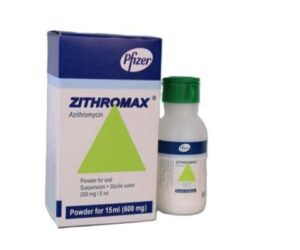
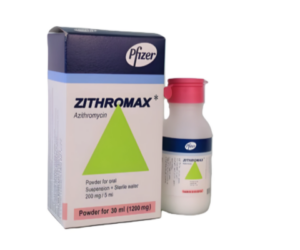
Antibiotic, belongs to the macrolides group used in the treatment of pneumonia, Streptococcus infections, sexually transmitted infections, mycobacterial infection, Lyme disease, infectious diarrhea, bronchiolitis and inflammatory acne vulgaris.
Indication & Usage
-Community acquired pneumonia: Outpatient: Oral: 500 mg on day 1, followed by 250 mg once daily for 4 days or 500 mg once daily for 3 days, some experts prefer to use as part of an appropriate combination regimen in all outpatients, regardless of comorbidities. Inpatient: Oral, IV: 500 mg once daily for a minimum of 3 days, as part of an appropriate combination regimen. -Gonococcal infection: Oral: 2 g as a single dose in combination with IM gentamicin or oral Gemifloxacin. -Chlamydia trachomatis: Oral: 1 g as a single dose, or 500 mg on day 1 then 250 mg once daily for 4 days; give in combination with ceftriaxone if there is microscopic evidence of gonococcal urethritis or if there is high clinical suspicion of gonococcal infection. -Streptococcus, group A: Pharyngitis: Oral: 12 mg/kg (maximum: 500 mg) on day 1, followed by 6 mg/kg (maximum: 250 mg) once daily on days 2 through 5, or 12 mg/kg (maximum: 500 mg) once daily for 5 days. -Pertussis: Oral: 500 mg on day 1, followed by 250 mg once daily on days 2 to 5. -Infectious diarrhea: Campylobacter gastroenteritis: Oral: 1 g as a single dose or 500 mg once daily for 3 days, If symptoms have not resolved after 24 hours following single-dose therapy, continue with 500 mg once daily for 2 more days. Cholera: Oral: 1 g as a single dose. Shigella gastroenteritis: Oral: 500 mg once daily for 3 days. Travelers’ diarrhea, empiric treatment: Oral: 1 g as a single dose or 500 mg once daily for 3 days. If symptoms have not resolved after 24 hours following single-dose therapy, continue with 500 mg once daily for 2 more days. A 3-day course of 500 mg once daily is the preferred regimen for dysentery or febrile diarrhea. -Inflammatory acne vulgaris (moderate to severe): Use as an adjunct to topical acne therapy: Oral:500 mg once daily for 4 consecutive days per month for 3 consecutive months -Pediatric dosing: described in dosage and administration section.
Active Ingredients
Azithromycin
Dosage & Administration
-Immediate release suspension and tablet may be taken without regard to food; extended release suspension should be taken on an empty stomach (at least 1 hour before or 2 hours following a meal). -Do not administer with antacids that contain aluminum or magnesium. -Oral suspension: Shake well before use. -Oral suspension: Mix the entire contents of the bottle with water till the sign on the bottle. -Injection: Infuse over 1 hour (2 mg/mL infusion) or over 3 hours (1 mg/mL infusion). Not for IM or IV bolus administration. -Pediatric dosing: -Streptococcal tonsillopharyngitis: Infants, Children, and Adolescents: Oral: 12 mg/kg/dose once daily for 5 days; maximum dose: 500 mg/dose. -Acute otitis media (AOM): Infants ≥6 months, Children, and Adolescents: Oral: Three-day regimen: 10 mg/kg once daily for 3 days; maximum dose: 500 mg/dose. -Gonococcal infection: Children >45 kg and Adolescents: Oral: 2,000 mg as a single dose in combination with IM gentamicin. -Infectious diarrhea: Campylobacter infection: Infants, Children, and Adolescents: Oral: 10 mg/kg/dose once daily for 3 days; maximum dose: 500 mg/dose. Shigellosis: Infants, Children, and Adolescents: Oral: 10 mg/kg/dose once daily for 3 days; maximum dose: 500 mg/dose. -Community-acquired pneumonia: Mild infection: Infants >3 months, Children, and Adolescents: Oral: 10 mg/kg once on day 1 (maximum dose: 500 mg/dose), followed by 5 mg/kg/dose (maximum dose: 250 mg/dose) once daily on days 2 to 5. Severe infection: Infants >3 months, Children, and Adolescents: IV: 10 mg/kg/dose once daily for at least 2 days (maximum dose: 500 mg/dose); when able transition to the oral route with a single daily dose of 5 mg/kg/dose (maximum dose: 250 mg/dose) to complete a 5-day course of therapy. -Bacterial rhinosinusitis: Infants ≥6 months, Children, and Adolescents: Oral: 10 mg/kg/dose once daily for 3 days; maximum dose: 500 mg/dose.
Side Effects
-Altered cardiac conduction, including prolonged QT interval on ECG, Clostridioides difficile associated diarrhea, cholestatic hepatitis, hepatocellular hepatitis, hearing loss and tinnitus, maculopapular skin rash. -Diarrhea, nausea, chest pain, facial edema, palpitations, diaphoresis, eczema, fungal dermatitis, pruritus, skin photosensitivity, skin rash, urticaria, increased lactate dehydrogenase, abdominal pain, anorexia, constipation, dyspepsia, enteritis , flatulence, gastritis, melena, oral candidiasis, stomatitis, vomiting, genital candidiasis, vaginitis, angioedema, fungal infection, local inflammation and pain at injection site, agitation, dizziness, drowsiness, fatigue, headache, insomnia , malaise, nervousness, pain, vertigo, hyperkinetic muscle activity, increased creatine phosphokinase in blood specimen, bronchospasm, cough, pleural effusion and fever.
Safety Advice
-In case of hepatic impairment: Use with caution due to potential for hepatotoxicity; discontinue immediately for signs or symptoms of hepatitis. -Should not be given to patients suffering from hypersensitivity to azithromycin, erythromycin, other macrolide antibiotics. -Prolonged use may result in fungal superinfection. -Use with caution in patients with myasthenia gravis; exacerbation and new onset of symptoms have occurred. -Use of azithromycin in neonates and infants <6 weeks of age has been associated with infantile hypertrophic pyloric stenosis (IHPS); the strongest association occurred with exposure during the first 2 weeks of life; observe for nonbilious vomiting or irritability with feeding. -In case of travelers’ diarrhea: Most cases are self-limited and may not warrant antimicrobial therapy. Some experts reserve antimicrobial therapy for severe diarrhea (eg, fever with blood, pus, or mucus in stool). -In case of inflammatory acne vulgaris there are other treatment regimens: Oral:500 mg once daily for 3 days in the first week, followed by 500 mg once weekly until week 10 or 500 mg once daily for 3 consecutive days each week in month 1, followed by 500 mg once daily for 2 consecutive days each week in month 2, then 500 mg once daily for 1 day each week in month 3. -In case of Streptococcal tonsillopharyngitis for Infants, Children, and Adolescents there is other treatment regimen: Oral: 12 mg/kg (maximum: 500 mg/dose) on day 1 followed by 6 mg/kg/dose (maximum: 250 mg/dose) once daily on days 2 through 5. -In case of acute otitis media in infants ≥6 months, children and adolescents there is another treatment regimen: five-day regimen: 10 mg/kg once on day 1 (maximum dose: 500 mg/dose), followed by 5 mg/kg (maximum dose: 250 mg/dose) once daily on days 2 to 5. -Incase of over dose be ready to tell or show what was taken, how much and when it happened, and seek immediate medical attention. For additional information call us on 16676.
Storage
Store at room temperature.
Storage
Store at room temperature.
Drug Interactions
-Atorvastatin: Azithromycin (Systemic) may enhance the myopathic (rhabdomyolysis) effect of Atorvastatin. -BCG Vaccine (Immunization): Antibiotics may diminish the therapeutic effect of BCG Vaccine. -Colchicine: may increase the serum concentration of Colchicine. -Dabigatran Etexilate: may increase serum concentrations of the active metabolite(s) of Dabigatran Etexilate. -Domperidone: may enhance the QTc-prolonging effect of Domperidone. -Ondansetron: may enhance the QTc-prolonging effect of Ondansetron. -Rifaximin: may increase the serum concentration of Rifaximin. -Simvastatin: Azithromycin may enhance the myopathic (rhabdomyolysis) effect of Simvastatin. -Sodium Picosulfate: Antibiotics may diminish the therapeutic effect of Sodium Picosulfate. -Vitamin K Antagonists (eg, warfarin): Macrolide Antibiotics may increase the serum concentration of Vitamin K Antagonists.
Pregnancy & Lactation
-Azithromycin crosses the placenta, Azithromycin is recommended for the treatment of several infections, including chlamydia, granuloma inguinale, and Mycobacterium avium complex in pregnant patients. -Azithromycin is present in breast milk. There is an increased risk for infantile hypertrophic pyloric stenosis (IHPS) in infants who are exposed to macrolides via breast milk, especially during the first 2 weeks of life. the decision to breastfeed during therapy should consider the risk of infant exposure, the benefits of breastfeeding to the infant, and benefits of treatment to the mother.